Agriculture and Environment

Agriculture and Environment

Social Rural Development Initiative (SRDI) recognizes that sustainable agriculture, forest conservation, and biodiversity protection are essential to food security, resilient livelihoods, and healthy ecosystems. Communities across Kenya and Somalia, particularly in arid and semi-arid lands, face increasing challenges from recurrent droughts, land degradation, deforestation, loss of biodiversity, and climate change. SRDI works with vulnerable communities to promote sustainable land management, climate-smart agricultural practices, tree growing, and the conservation of natural resources, helping restore degraded landscapes while strengthening community resilience and livelihoods.

Through its Agriculture, Forestry and Biodiversity program, SRDI supports community-led initiatives that enhance agricultural productivity, protect ecosystems, and promote the sustainable use of natural resources. The program integrates agroforestry, soil and water conservation, rangeland restoration, biodiversity protection, environmental awareness, and community capacity building. By working with farmers, pastoralists, local institutions, and development partners, SRDI promotes nature-based solutions that improve ecosystem health, support sustainable food production, protect indigenous plant and animal species, and contribute to long-term climate resilience.

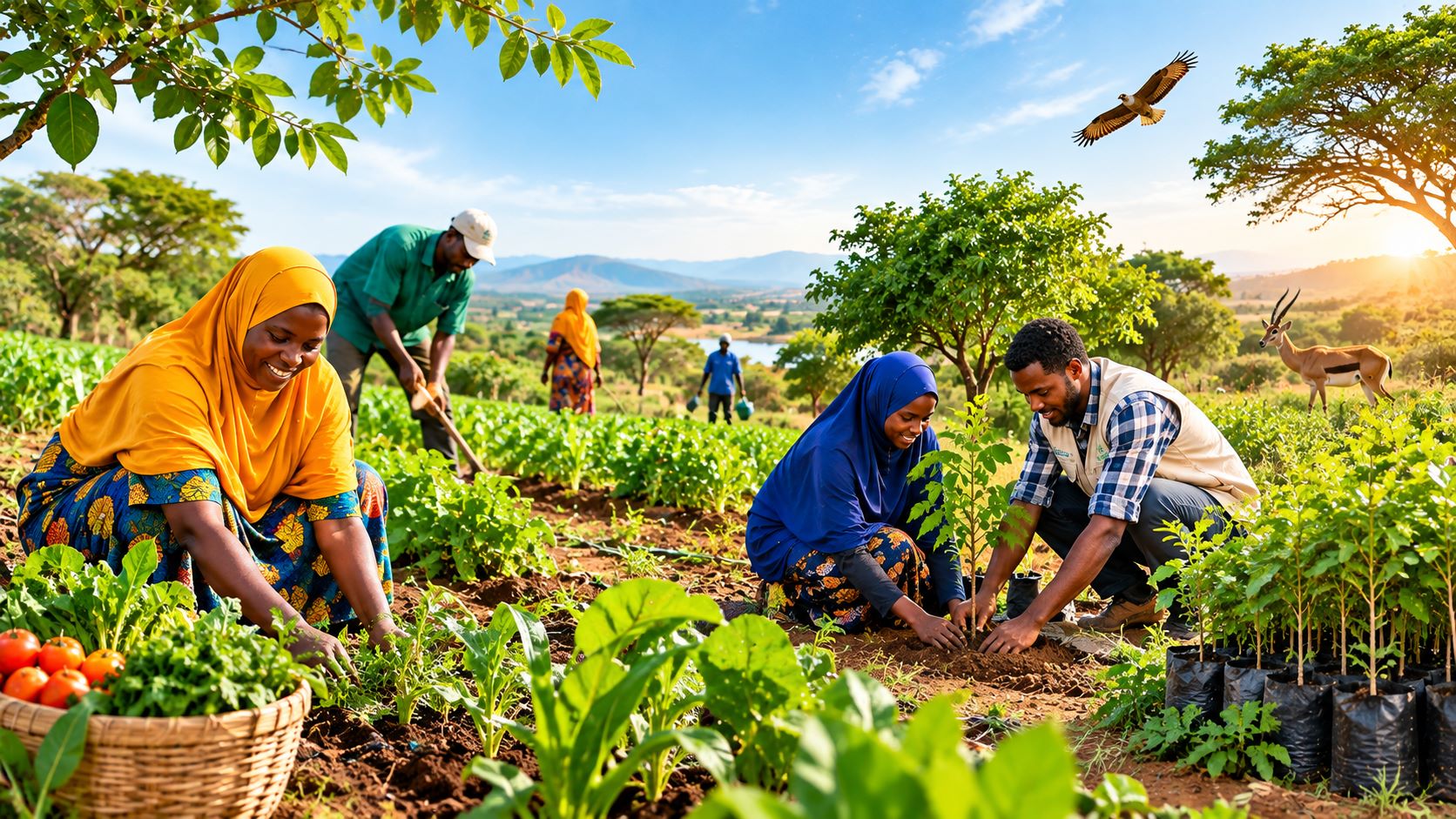
Key Program Interventions

  1. Climate-Smart and Sustainable Agriculture: Promoting drought-tolerant crops, improved farming techniques, sustainable soil management, and climate-adaptive agricultural practices to increase productivity and resilience to climate shocks.

  2. Agroforestry and Tree Growing: Supporting community tree-planting initiatives, agroforestry systems, and the cultivation of indigenous and drought-resistant tree species to restore vegetation, improve soil fertility, provide shade, and diversify household livelihoods.

  3. Forest Conservation and Restoration: Promoting the protection and restoration of degraded forests and woodlands through community-led conservation, sustainable harvesting practices, and environmental awareness initiatives.

  4. Biodiversity Conservation: Supporting the protection of indigenous plant species, wildlife habitats, and local ecosystems while promoting the sustainable use of biodiversity and natural resources.

  5. Soil, Water and Rangeland Management: Promoting soil erosion control, water conservation, rangeland rehabilitation, and sustainable grazing practices to reduce land degradation and strengthen the resilience of agro-pastoral communities.

  6. Community Environmental Education and Governance: Building the capacity of farmers, pastoralists, community groups, and local institutions in natural resource management, environmental protection, climate change adaptation, and community-led conservation.
