 September 7, 2026
In the vast and often challenging landscapes of North Eastern Kenya, education represents more than a classroom, a textbook, or a certificate. It represents hope, opportunity, dignity, and the possibility of a better future for children, young people, families, and entire communities.
For many children growing up in arid and semi-arid communities, accessing quality education can be difficult. Long distances to schools, limited learning resources, inadequate water and sanitation facilities, poverty, insecurity, and climate-related challenges can affect school attendance and learning outcomes. For girls, children living with disabilities, and other vulnerable groups, these barriers can be even greater.
Yet across these communities, there is a growing recognition that education is one of the most powerful tools for sustainable development.
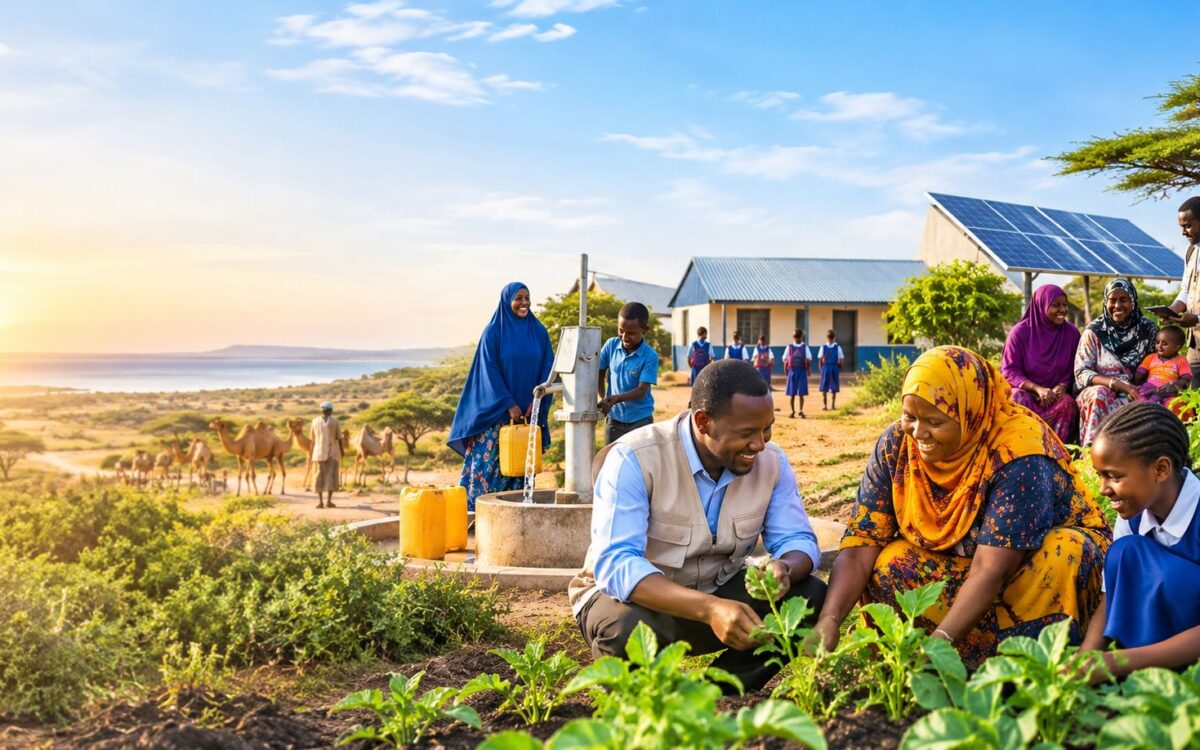
This is where organizations such as Social Rural Development Initiative (SRDI) bring an important development perspective. SRDI identifies education as one of its core areas of work, alongside Water, Sanitation and Hygiene (WASH), health, nutrition, food security and livelihoods, protection, shelter, and skills development. Its mission emphasizes empowering vulnerable and disadvantaged communities toward self-reliance and sustainable development through capacity strengthening, education, and food production.
Education Beyond the Classroom
In North Eastern Kenya, improving education requires looking beyond the school building. A child cannot learn effectively when they lack access to safe drinking water, adequate sanitation, nutritious food, or a safe learning environment.
School-based WASH interventions are therefore an important part of creating conditions in which children can attend school regularly and participate with dignity. SRDI similarly highlights the importance of WASH in schools as part of its education programming.
Equally important is investing in teachers, parents, community leaders, and young people. When communities participate in education, they become active partners in protecting children’s rights and creating environments where learning can thrive.
Empowering Girls and Vulnerable Children
Every child deserves an equal opportunity to learn regardless of gender, disability, economic circumstances, or social background.
For girls in particular, education can open pathways to skills, employment, entrepreneurship, leadership, and greater participation in community development. Supporting girls to remain in school requires coordinated efforts addressing the practical, social, and economic barriers that can interrupt their education.
An inclusive approach also ensures that children with disabilities and marginalized groups are not left behind. SRDI’s stated values include equality and equity, gender mainstreaming, social justice, and wholeness and inclusiveness—principles that are highly relevant to building education systems that serve every child.
Skills for a Changing Future
Education should prepare young people not only to pass examinations but also to participate meaningfully in their communities and economies.
Vocational education, entrepreneurship, digital skills, technical training, and other forms of skills development can provide young people with practical pathways toward self-reliance. SRDI identifies vocational education training and skills development for women, children, and youth among its education priorities.
A Shared Responsibility
Transforming education in North Eastern Kenya cannot be achieved by one organization alone. It requires collaboration among communities, schools, parents, government institutions, development organizations, donors, private-sector partners, and young people themselves.
Every classroom supported, every teacher equipped, every girl retained in school, every child given access to clean water, and every young person equipped with practical skills contributes to a stronger and more resilient community.
Education is ultimately an investment in people. By creating inclusive learning environments, strengthening essential services, and equipping young people with knowledge and practical skills, communities in North Eastern Kenya can build a future shaped not by limitations, but by opportunity.
SRDI believes in empowering vulnerable and disadvantaged communities through education, capacity strengthening, and sustainable development. Together, we can help ensure that every child has the opportunity to learn, grow, and contribute to a brighter future.